

Running a restaurant is one of the hardest businesses to keep profitable. Food prices swing. Staff turn over. Equipment breaks at the worst possible time. And your margins — if you’re lucky — sit somewhere between 3% and 9%.
That means every dollar wasted comes straight out of what little profit you have. The good news is most restaurants are losing money in the same predictable places. Fix those, and the numbers shift fast.
Here are six strategies that actually move the needle.
Why the Math Is So Unforgiving
Before cutting anything, know what you’re working with.
A typical full-service restaurant spends 28–35% of revenue on food, another 28–35% on labor, and the rest on rent, utilities, insurance, and equipment. Combined food and labor — called prime cost — should stay below 65% of total sales. Most struggling restaurants are running it at 70–75% and wondering why payroll clears but nothing’s left.
A 5% drop in prime cost on $1 million in annual revenue is $50,000 back in your pocket. That’s not a rounding error. That’s a salary, an equipment upgrade, or six months of breathing room.
1. Get Serious About Food Cost Tracking
Most restaurants check food cost weekly or monthly. That’s too slow.
By the time you see the number, you’ve already lost the money. Track Cost of Goods Sold (CoGS) daily. It takes 15 minutes and tells you immediately when something is wrong — a supplier delivered short, a line cook is portioning heavy, or a prep recipe is off.
Target food cost percentage: 28–32% for full-service, 25–30% for fast casual.
A few specific changes that work:
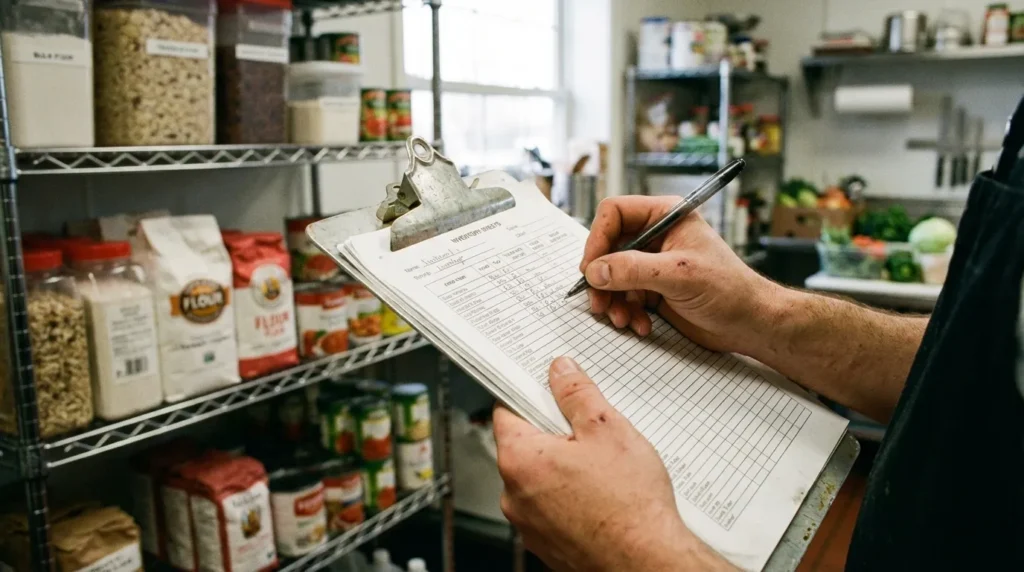
- FIFO strictly enforced. First-In, First-Out is basic, but most kitchens don’t actually enforce it. Walk the cooler. Rotate stock every delivery. Spoilage is pure waste.
- Standardize every recipe with exact gram weights. Eyeballed portions drift. A chicken breast that runs 6 oz instead of 5 oz is a 20% food cost increase on that dish, every plate, every service.
- Negotiate on volume. If you’re using a national distributor like US Foods or Sysco, ask for a quarterly volume review. Most operators don’t ask. Suppliers expect them to.
2. Schedule Labor Like a Business, Not a Habit
Labor is where restaurants bleed most. And most of the bleeding comes from scheduling by feel rather than by data.
Cross-train your team. A server who can also run food, a prep cook who can work the line in a pinch — these people reduce your minimum staffing requirements without sacrificing service. Cross-training typically shaves 2–4% off labor cost in restaurants that implement it properly.
Use scheduling software. Tools like Toast, 7shifts, or Restaurant365 show you labor cost in real time as you build the schedule. You can see immediately when you’re overstaffed before you publish the week.
One hidden cost most operators underestimate: turnover. Replacing a line cook costs $5,000–$6,000 on average when you factor in recruiting, onboarding, and the productivity gap. Keeping staff longer is one of the highest-ROI investments in the business.
3. Cut Utility Bills Without Touching Service Quality
Energy is a fixed cost that most restaurants treat as inevitable. It isn’t.
A restaurant running fully ENERGY STAR-certified equipment saves roughly $4,000 per year compared to standard commercial equipment — and that’s a conservative estimate from the EPA’s own data. Switching doesn’t have to happen all at once. Replace equipment as it dies, and prioritize ENERGY STAR when you do.
Smaller wins that add up:
- LED kitchen lighting cuts lighting energy use by 50–75% vs. fluorescent.
- Turn off equipment between services. Fryers, ovens, and griddles left on during a 3-hour break between lunch and dinner waste significant energy for zero output.
- Smart thermostats in dining areas reduce HVAC costs 10–15% with zero impact on guest experience.
None of this requires capital investment beyond the cost of the bulbs and a $50 thermostat.
4. Stop Paying Emergency Rates for Equipment Repair
This is where most restaurant operators make an expensive mistake.
When a piece of equipment breaks during service, you call whoever picks up first. That’s emergency pricing — typically 2–3x the rate of scheduled maintenance — plus potential revenue loss from a closed station or limited menu.
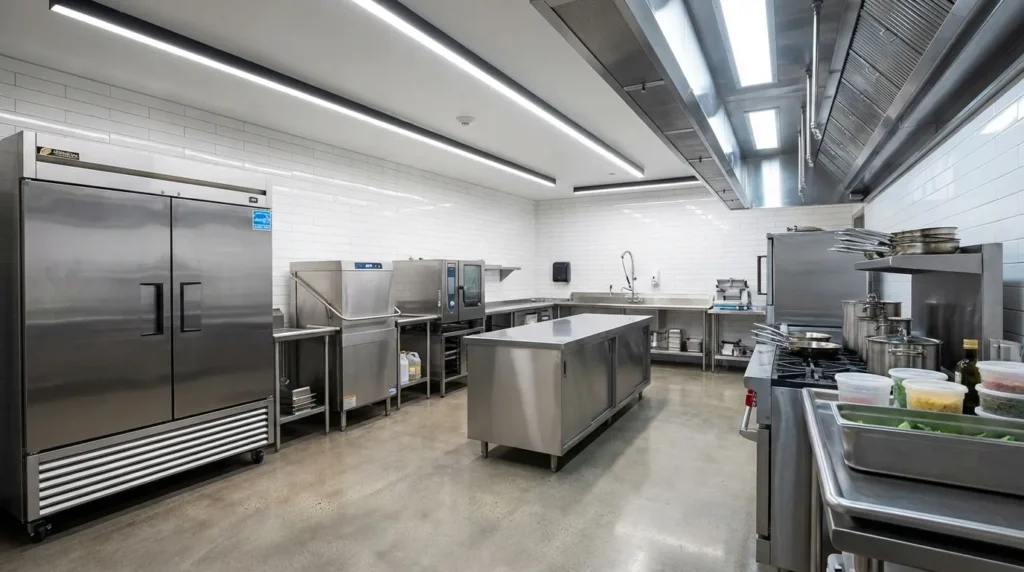
The commercial stove is your highest-risk piece of equipment. It runs harder and longer than anything else in the kitchen. Burner issues, igniter failures, thermostat drift, and gas valve problems are predictable failure points — and they almost always give warning signs before full failure.
Build a quarterly maintenance schedule. Check burner output, clean igniter ports, inspect gas connections, and test thermostat calibration. This takes one technician visit every three months and costs a fraction of an emergency call.
When something does go wrong with your range or stove, know when to stop and call a professional. Gas line issues, thermostat calibration, and internal valve problems are not DIY repairs — not in a commercial environment. Working with experienced technicians who specialize in Professional Restaurant Stove Repair means the repair is done correctly the first time, without the liability of an improper fix in a commercial kitchen.
Preventive maintenance on your stove, ovens, refrigeration, and dishwasher will typically cost $800–$1,500 per year. A single emergency repair and half-day closure can cost double that before you’ve paid anyone.
5. Engineer the Menu for Margin, Not Ego
Menus grow over time. Operators add dishes because guests request them, because a chef wants to try something, because the competition has it. Over time, you end up with 60 items when 30 would serve you better.
Run a basic menu matrix every quarter. Plot each item on two axes: popularity and profitability. Items that are high on both are your stars — promote them. Items that are low on both are your dogs — cut them. Items that are popular but low margin need either a price adjustment or an ingredient swap.
Portion standardization feeds directly into this. A dish that’s engineered to cost 29% with a 6-oz protein portion creeps to 34% when the kitchen runs it at 7 oz. The recipe card means nothing without a scale on the pass.
One more lever: price strategically rather than across the board. A $1 increase on your 10 highest-selling items adds more revenue than a $2 increase spread across 30 items. Guests notice broad price hikes. They barely notice when a specific dish they love goes up a dollar.

6. Audit Every Fixed Cost Once a Year
Fixed costs feel untouchable. They’re not.
Most restaurants are overpaying for at least one of the following: liability insurance, merchant processing fees, software subscriptions, or linen and uniform services. These costs creep up through auto-renewals and rate adjustments that nobody reads.
Set a calendar reminder once a year to get competing quotes on insurance and merchant processing. A 0.3% reduction in processing fees on $1.5M in card volume is $4,500 back per year. It takes one phone call.
Audit your software stack. Most restaurants using two or three platforms have overlapping features they’re paying for twice. Consolidating to an integrated POS and restaurant management system often cuts monthly software spend by 20–30%.
Small Changes, Real Compounding
Reducing restaurant operating costs isn’t about one big fix. It’s about closing five or six small leaks simultaneously.
Cut food waste by 3%. Reduce labor cost by 2%. Drop energy spend by $300/month. Build a maintenance schedule that avoids two emergency repair calls per year. Trim one underperforming menu section. Renegotiate processing fees.
None of those changes are dramatic. Together, they can swing a 4% margin restaurant to 8% — and that’s the difference between surviving and actually building something.