

The smart home market has delivered a remarkable range of devices designed to help homeowners maintain cleaner living environments with less effort. Robot vacuums navigate rooms autonomously. UV sanitizer wands eliminate surface pathogens in seconds. Air quality monitors track particulate levels in real time. Handheld fabric steamers promise to refresh upholstery between professional cleans.
These devices are genuinely useful — but understanding exactly what each one does, and where its effectiveness ends, matters for any homeowner trying to keep upholstered furniture in genuinely good condition. Smart home technology and professional cleaning are complementary, not interchangeable. Here’s the honest breakdown.
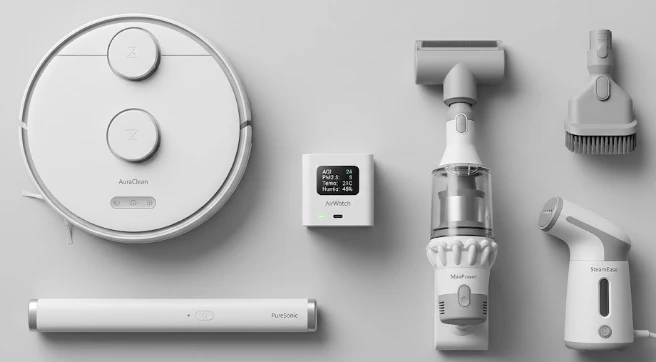
Robot Vacuums: Indirect Benefit for Upholstery
Modern robot vacuums from Roborock, iRobot, and Ecovacs have improved dramatically — LiDAR mapping, automatic suction adjustment, multi-surface detection. For hard floors and low-pile carpets, they’re genuinely effective maintenance tools. For upholstery specifically, the picture is more complicated.
Most robot vacuums are designed for floor surfaces. They don’t climb sofas, and units that offer an upholstery attachment mode typically deliver moderate suction through a small nozzle — good for surface debris, ineffective against embedded particulates. The practical value is indirect: by keeping floors consistently clean, robot vacuums reduce the amount of material transferred to furniture through foot traffic and airflow. A real benefit — but a rate-reduction, not a cleaning solution for the furniture itself. For direct upholstery work, a quality handheld vacuum with a dedicated fabric tool is more useful. The key limitation remains depth — consumer suction doesn’t penetrate the mid-layers of fabric pile where the majority of dust mites and allergens reside.
UV Sanitizer Wands: Real Technology, Narrow Application
UV-C sanitizer wands use ultraviolet-C light to neutralize bacteria, viruses, and dust mites on exposed surfaces. The technology is legitimate — UV-C light at the right wavelength and exposure duration does effectively neutralize biological contaminants. The qualifier “exposed surfaces” is critical for upholstery applications.
UV-C light travels in straight lines and requires direct contact with the target organisms. On fabric, it penetrates only the top layer of the pile — dust mites and allergens embedded deeper in the fiber structure aren’t reached. Consumer wands are also limited by the speed at which users pass them over surfaces: effective sanitization requires slow, close movement to deliver sufficient light dose. Studies on consumer UV wands show highly variable results depending on technique, device power, and surface type.
For hard home surfaces and electronics — countertops, keyboards, remote controls — UV sanitizer wands are solid tools. For upholstery, their benefit is real but limited to the surface layer only.
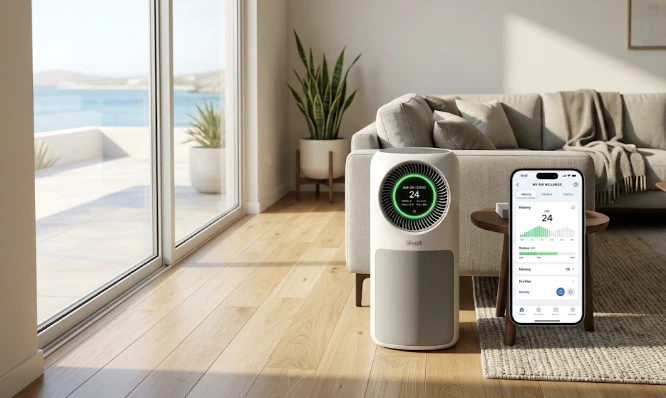
Air Purifiers: The Highest-Impact Smart Home Investment
This is the category where smart home technology delivers its most meaningful impact on upholstery maintenance — not by cleaning furniture directly, but by reducing the airborne particulate load that settles into fabric surfaces continuously.
HEPA-filtered air purifiers capture airborne particles — dust, pet dander, pollen, mold spores, fine particulates — before they settle onto furniture surfaces. In a room with an appropriately sized HEPA purifier running consistently, upholstery accumulates airborne contaminants measurably more slowly. Over time, this means less embedded particulate matter, slower visible soiling, and longer intervals before deep professional cleaning is necessary.
Smart air quality monitors from Awair and Airthings add real-time PM2.5 tracking that can trigger purifier response automatically when particulate levels spike — during cooking, after outdoor air events, or when HVAC filters need replacement. For households with allergy sufferers or young children, a HEPA purifier paired with a smart monitor is the highest-ROI smart home investment in this category.
Fabric Steamers: Useful for Refresh, Not Deep Clean
Handheld fabric steamers use pressurized steam to relax fibers, reduce surface odors, and kill surface bacteria. For upholstery, they’re useful for refreshing lightly soiled pieces and reducing mild odors between professional appointments. They are not a substitute for extraction cleaning.
Steam introduces moisture without the extraction step that removes dissolved soil. In humid climates like the Pacific Northwest, steaming upholstery without ensuring rapid drying risks mold development in cushion fill. Fabric steamers are also inappropriate for “S”-coded upholstery — water-sensitive fabrics that require solvent-based cleaning — where steam causes permanent water marks and dye migration. Check the fabric care tag before steaming anything.
What No Gadget Can Replace
The honest limitation shared by every consumer cleaning gadget — regardless of sophistication or review scores — is depth. Surface cleaning is achievable with the right device. Embedded cleaning, where contaminants have worked into the mid-layers of fabric pile and into cushion fill beneath, requires professional hot water extraction or dry-solvent treatment.
Professional extraction injects pressurized solution deep into the fabric and immediately extracts it along with dissolved soil, allergens, and biological material — reaching areas that vacuums, UV wands, and steamers don’t touch. For most households with regularly used upholstered furniture, professional deep cleaning once a year maintains the fabric at a hygiene and quality level that no combination of consumer gadgets replicates. Homeowners looking for quality sofa cleaning in Bothell Washington and the greater Seattle metro area typically find that the most effective routine combines consistent gadget-assisted maintenance between visits with annual or biannual professional cleaning.
The Optimal Upholstery Care Stack
The most effective smart homeowner approach stacks four layers:
Continuous environmental layer: A HEPA air purifier in main living areas, reducing the airborne particulate load that accumulates in upholstery over time. Add a smart air quality monitor if indoor air health is a household priority.
Weekly surface layer: A handheld vacuum with an upholstery tool for surface debris and pet hair. Consistent use slows visible soiling and reduces the embedded contamination rate between professional cleans.
Periodic refresh layer: A fabric steamer for water-safe upholstery when light freshening is needed — after gatherings, when odors develop, or when the fabric needs texture restoration. Verify cleaning codes first.
Annual reset layer: Professional extraction cleaning by a qualified technician, addressing what consumer technology cannot — embedded allergens, deep soiling, and biological contamination throughout the full depth of the fabric and cushion fill.
No single gadget covers all four layers. The homes with the cleanest, longest-lasting upholstered furniture are the ones where technology and professional expertise are each applied to what they actually do well — and where neither is asked to substitute for the other.